
The world's leading manufacturer of precision hardware products
Has decades of rich experience and advanced equipment
2026-05-20 05:18:57
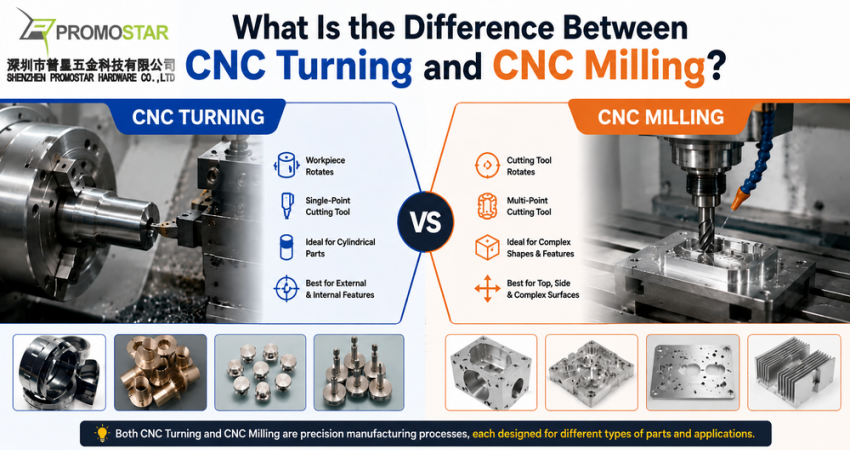
In modern manufacturing, precision manufacturing is basically a key requirement, and the most common precision manufacturing methods include CNC turning and CNC milling. Both approaches are kind of needed to make high quality industrial parts, but they work in really different ways. The convenience, customization, and precision that come with these CNC machining techniques have made them a go-to option for many businesses, across industries, especially if they want to buy CNC turning parts online. At the same time, manufacturers are buying high precision PC Parts online too, to help lock in optimum performance and accuracy for industrial uses. It’s useful to understand the difference between CNC turning and CNC milling so the project picks the right process, and the whole manufacturing workflow becomes more efficient.
CNC: Computer Numerical Control – basically a manufacturing technology where machines are guided by programmed software instructions. With CNC machining, it’s possible to make very accurate parts with very little room for human error. Turning is a subtractive manufacturing process, just like CNC milling. In short, it’s about removing material from a solid component, so the desired form can be created. But there are two different removal processes, and that comes down to how the movement is set up, during cutting. CNC machining’s precision and repeatability are extremely helpful in many industries like automotive, aerospace, electronics, medical equipment , and industrial production in general.
CNC turning is a machining method that uses a cutting tool to cut the rotating workpiece. When the material is spun, the cutting tool takes away excess material forming cylindrical or round parts.
It is becoming widely employed for producing:
CNC turning is a very efficient process for making symmetrical parts in smooth surface finishes and with close tolerances. CNC turning parts for sale are not only quick and accurate in small batch production but also suitable for large orders and various industries. Turning machines, also referred to as CNC lathes, are machines that are used specifically to provide high speed rotational machining and are great for creating parts that require circular geometry.
Unlike turning, the process of CNC milling is different. Milling is a process where the cutting tool spins and the part is stationary. The rotating tool is used to remove material from the workpiece to form shapes, slots, holes and complex surfaces.
There are some typical applications for CNC Milling:
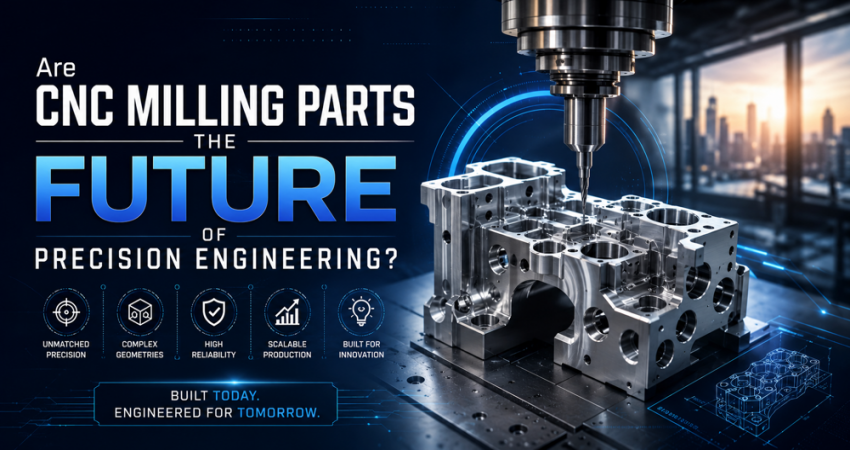
One advantage of milling over turning is that extremely complex and non-cylindrical designs can be created. Great for parts that require more than two dimensions and geometry. When you order CNC milling online you will get to know it is often employed to create custom prototypes and parts with a high degree of precision when design flexibility is crucial in manufacturing.
These two processes are based on CNC but work differently and are used for different applications and are different in their design capabilities. The primary difference is in the action. CNC turning is a process in which the workpiece is rotating while the tool is cutting. The cutting tool rotates and the workpieces don't move in a CNC milling machine. In general, the CNC moulding process will run faster if the part's form is complex or irregular; and the CNC turning process will run faster if the part is a round or cylindrical form.
The other distinguishing factor is the type of parts made by each process. Turning is the most suitable process for parts of symmetrical shape, whereas the milling process is more flexible in terms of creating complex design and multi-surface parts. In this modern industrial production era, there are also numerous businesses taking advantage of the specialized parts required, which are bought and sold online, because of the lightness of aluminium and its high precision in processing.
The industries that demand high-speed and high-volume production have numerous benefits to CNC turning. Efficiency is a plus. Turning machines can make cylindrical parts in a short time, and there is a high degree of accuracy. The process also gives smooth surface finishes, thus decreasing the need for more finishing work. CNC turning is also a low-cost process for manufacturing large volume parts due to material saving and man power reduction. This is especially beneficial for the automotive, aerospace, and mechanical industries, where precision shafts and rotational parts are frequently needed. Moreover, industries are inclined to use parts manufactured by machines as well as products like Buy stainless steel turning parts online to guarantee durability. CNC turning is also a low-cost process for manufacturing large volume parts due to material saving and man power reduction. This is especially beneficial for the automotive, aerospace, and mechanical industries, where precision shafts and rotational parts are frequently needed. Moreover, industries are inclined to use parts manufactured by machines as well as products like Buy stainless steel turning parts online to guarantee durability.
In general CNC milling is versatile, and can create very complex parts. It enables manufacturers to create complex shapes that are hard or impossible to make using conventional manufacturing processes.
Milling machines can be used to:
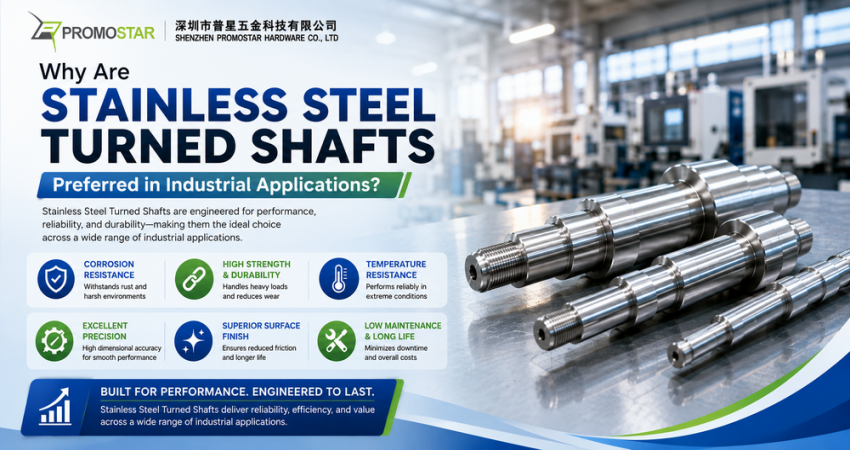
It provides precision holes and slots. It offers precision holes and slots. CNC milling is highly versatile, making it suitable for a wide range of applications, such as creating custom components, prototypes, and complex engineering parts. CNC turning is typically the best option for round or cylindrical parts, which are made up of shafts, rods, bushings, etc. It offers a quicker production and better precision in the symmetrical designs. If your project has more complex forms, a more detailed surface, multiple cutting angles, you can choose more flexible CNC milling, and have a higher level of cutting ability. In many instances, manufacturers will employ a combination of turning and milling to produce extremely accurate and completely tailored parts. Furthermore, industries frequently buy Stainless Steel Turned Shafts online together with different parts including machined parts, for robust mechanical purposes online.
CNC turning and CNC milling are really important when it comes to making things. They do things and which one you use depends on what the part is supposed to do and what it looks like. CNC turning is better for making parts and for making a lot of parts quickly. On the other hand CNC milling is better for making complicated parts with a lot of details. If you understand how CNC turning and CNC milling work you can make choices for your project. This means you can make things efficiently and accurately and the final product will be better.
When you are making things on a scale it is really important to choose the right way of making things. Whether you want to buy CNC turning parts online, find parts that are very precise or make more things in less time you need to pick the right machining process. This is important if you want your product to work well for a time. The website pshardware.com has a lot of precision engineered products that can help with manufacturing. They have solutions for machining and industrial parts.
1. What is the main difference between CNC turning and CNC milling?
The main difference between CNC turning and CNC milling is that CNC turning spins the workpiece and the cutting tool stays still. CNC milling spins the cutting tool and the workpiece stays in one place.
2. Which process is better for parts?
CNC turning is the way to go when you need to make cylindrical parts or parts that are symmetrical because CNC turning is better suited for these kinds of parts.
3. What industries use CNC milling and CNC turning?
A lot of industries use CNC milling and CNC turning like the aerospace industry, the medical industry, the electronics industry and the industrial manufacturing industry; they all use both CNC milling and CNC turning.
4. Is CNC milling more versatile than CNC turning?
Yes CNC milling is more versatile than CNC turning because CNC milling can make complicated shapes and details compared to CNC turning. This is why CNC milling can do more things than CNC turning.
5. Can CNC turning and CNC milling be used together?
Yes a lot of manufacturers use both CNC turning and CNC milling together to make parts that are very precise so they use CNC turning and CNC milling together to get the best results.
Date : 30 Jun 2026

Date : 25 Jun 2026
Date : 22 Jun 2026
Date : 18 Jun 2026
Date : 11 Jun 2026
Date : 29 May 2026