
The world's leading manufacturer of precision hardware products
Has decades of rich experience and advanced equipment
2026-05-25 06:03:59
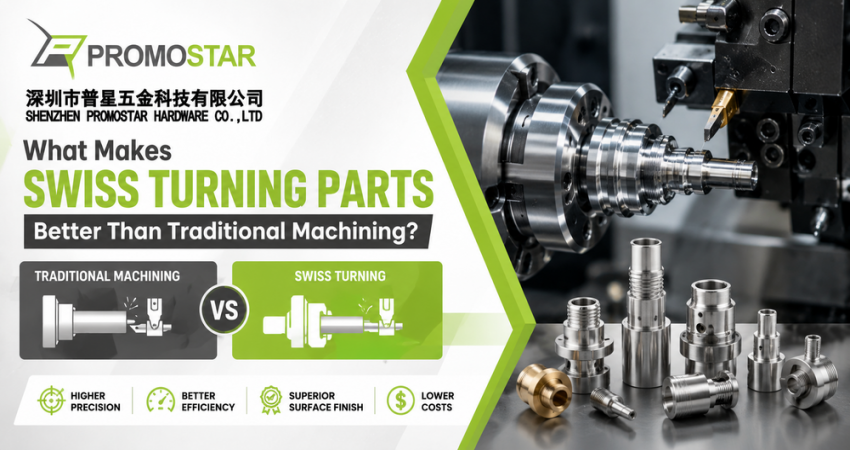
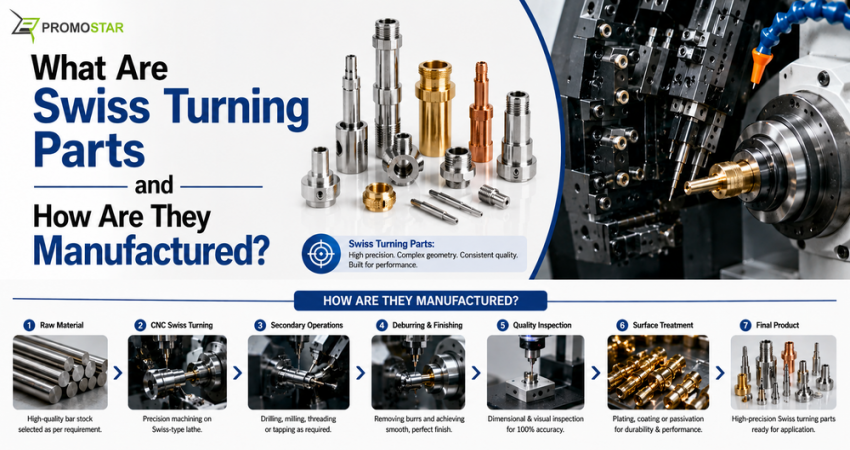
Swiss turning parts tend to be better than what you get from traditional machining, and it’s not just marketing, it’s more about how the whole thing is set up in real life, you know. Precision manufacturing keeps getting more serious in basically every modern industry. Especially where aerospace, automotive, medical equipment, and electronics need little, complicated, super accurate components. When companies push for smaller shapes and tighter specs, the usual machining approach can fall a bit short, often not because it can’t do it at all, but because it struggles to do it efficiently and consistently. That’s why more businesses go for the option to Buy Swiss Turning Parts online, since Swiss turning brings an uncommon combo of precision, steadiness, and speed.
And on the same note, many operations don’t stop at “turning alone.” They also search for products like Buy Stainless steel 316 turning shafts online when they need extra strength, plus corrosion resistance. Swiss turning keeps showing up as one of the more trusted machining methods for advanced manufacturing, so the real question is what makes it outperform traditional machining. Let’s walk through the main differences and why people care so much.
Swiss turning is a CNC machining process built for small parts that still need tight precision. Instead of using a typical setup where the workpiece sits with a bit more distance from the cutting zone, Swiss turning uses a guide bushing and keeps the workpiece supported much closer to the tool. That closeness helps cut down vibration, and it makes machining stability feel a lot more “locked in.” With traditional lathes or standard machining methods, the workpiece is usually held farther away from the cutting area. That extra distance can cause tiny movements, and for small, delicate parts those small movements can turn into real precision problems.
Swiss turning is often used for things like:
This guide bushing approach allows manufacturers to produce intricate details with exceptional accuracy and repeatability.
If you ask around, most people point to precision first. Swiss turning tends to deliver unmatched accuracy because the workpiece is supported closer to the cutting tool. Less deflection, less vibration during the cut, more reliable dimension control.
That typically turns into results like:
Traditional machining can get harder when you’re dealing with extremely tiny or highly detailed parts. Even minor chatter or vibration can shift the final dimensions, and then you’re stuck chasing corrections. So when companies decide to order Swiss Turning Parts online they usually do it because Swiss machining is built to hold tight tolerances for demanding industrial needs.
Swiss turning machines are built for automation. A lot of modern Swiss CNC equipment for sale can run multiple operations in a single setup, so there’s less need to stop, re-fix, and do secondary processing.
In practice this improves efficiency by:
Traditional machining often needs several setups and tool changes to reach the same end result, which can increase both time and labor costs. When speed matters together with precision, Swiss turning tends to hold a big edge. In industries where speed and accuracy both matter, Swiss turning usually has a clear advantage.
Swiss turning tech is especially good for small parts that are still complex and require extreme precision. That’s why it’s common in medical device manufacturing and electronics, where the tolerances are rarely forgiving.
The process can manage:
In a lot of advanced manufacturing workflows, companies also source items like Buy Precision Screw online, because these small precision elements often decide how well the final assembly works mechanically. Traditional machining can be more limited with miniature designs or very intricate shapes. Swiss turning, on the other hand, is basically optimized for those conditions.
Another big reason Swiss turning is popular is the surface finish. Because the process is stable and tightly controlled, the finished parts often need little to no extra finishing afterward.
Common benefits include:
Many manufacturers use processes like Swiss Turning Parts for sale because you can get both quality and efficiency when production is at scale. And for applications where corrosion resistance matters, businesses frequently look for solutions like Buy Stainless steel turning parts online to pair precision machining with stronger material performance. That flexibility is a big reason Swiss turning stays one of the more reliable manufacturing options for modern industrial requirements.
As manufacturing demands keep changing , industries want more and more of ,
Traditional machining still does a lot of good work for many jobs, but Swiss turning brings some pretty clear benefits when the application is precision focused. Swiss-type machining can handle intricate geometry and repeatable results in a quicker, more controlled way, so it’s often chosen for modern engineering tasks. Many companies, when they need high performance components, will go with options like Buy Brass Bush Automatic turned parts online because Swiss machining delivers the precision level that advanced industrial systems expect.
In a lot of real use cases, Swiss turning parts are considered “better” than traditional machining, mainly because they deliver superior precision, efficiency, consistency, and flexibility. The main idea is simple: small and complex components can be made with tight tolerances, and that makes Swiss turning a strong fit for sectors where accuracy really matters. If you want to Buy Swiss Turning Parts online, boost production quality, or cut down on manufacturing inefficiencies, Swiss turning gives you a modern approach that matches today’s precision engineering needs. For dependable machining services and industrial-grade components, pshardware.com has a broad selection of precision-engineered products built for advanced manufacturing requirements
1. What are Swiss turning parts?
Swiss turning parts are precision components made on Swiss-type CNC machines, aimed at high accuracy.
2. Why is Swiss turning coming out more accurate compared to traditional machining?
The guide bushing, well it keeps the workpiece supported very near the cutting tool, this helps calm down vibration and the final precision ends up better.
3. Which industries are using Swiss turning the most?
In general, aerospace, medical, automotive, electronics, and industrial manufacturing, they all use Swiss turning quite often for demanding work.
4. Does Swiss turning work well for complex components?
Yes, it works great especially when you need small components, intricate shapes, and extremely detailed precision parts.
5. Can Swiss turning help reduce production costs?
Yes, it boosts efficiency, reduces waste, and it also limits secondary processing, so in the long run it ends up being more cost-effective.
Date : 30 Jun 2026

Date : 25 Jun 2026
Date : 22 Jun 2026
Date : 18 Jun 2026
Date : 11 Jun 2026
Date : 29 May 2026